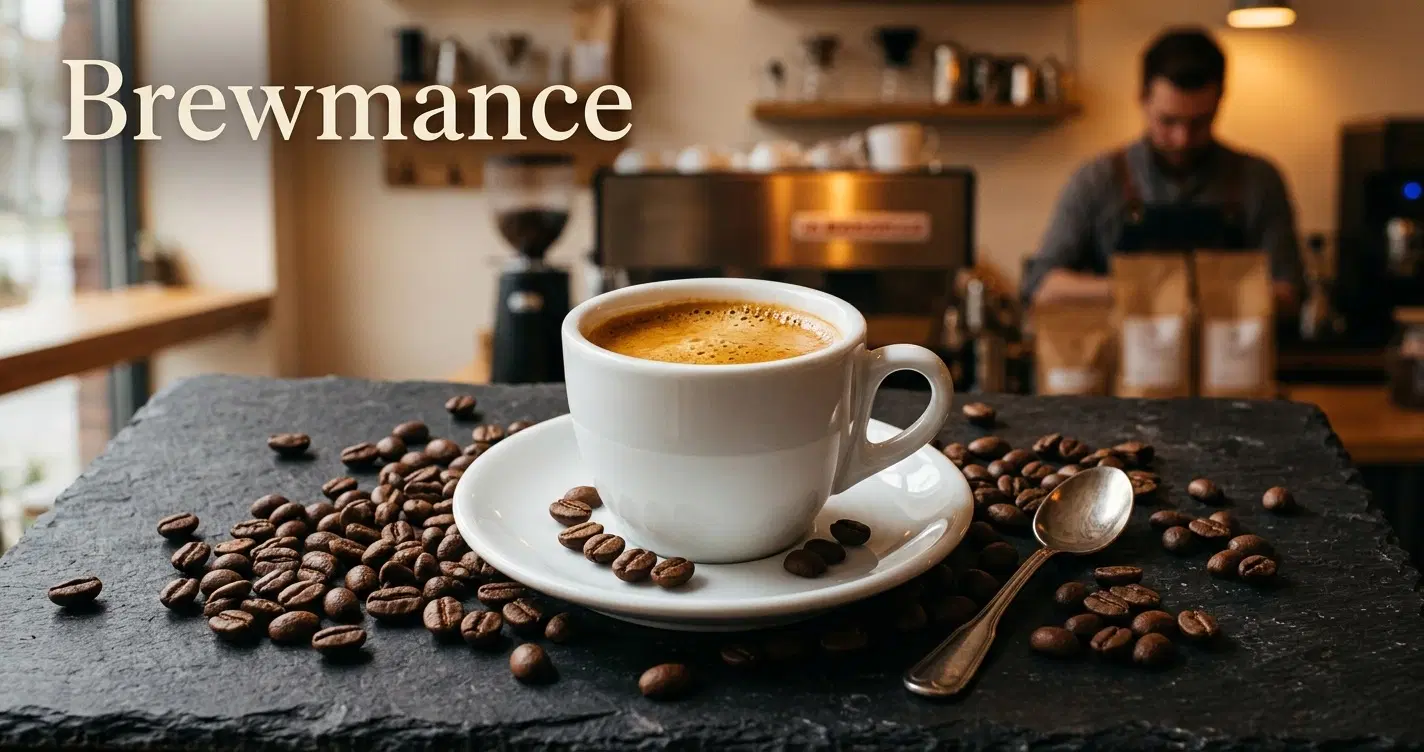
How to Make a Great Espresso at Home: Complete Guide 2026
How to pull the perfect espresso at home? 5 barista secrets, 3 common mistakes, and the grinder adjustment that changes everything.
How to Make a Great Espresso at Home: Complete Guide 2026
A perfect espresso is 25-30 seconds of extraction, a golden, dense crema, and complex aromas that linger on the palate for minutes. Achieving this result at home requires understanding a few fundamental principles. This guide gives you all the keys.
Quick answer: For a good espresso at home, use fresh coffee roasted within the last 4 weeks, ground just before extraction. Adjust the grind to get 36g of coffee in 25-30 seconds from 18g of ground coffee. Tamp with 15-20 kg of pressure, keeping it level.
What Are the Fundamental Variables of a Good Espresso?
Before going into details, here are the 5 variables that determine your espresso quality:
- The coffee — origin, freshness, roast level
- The grind — fineness, consistency
⚙️ The grinder makes the difference. A good grinder transforms ordinary coffee into a memorable experience. Our manual vs electric grinder guide compares precision, price, and maintenance.
- The dose — precise weight measurement
- The tamp — pressure and uniformity
- The extraction — time, temperature, pressure
☕ No espresso machine? The Italian coffee maker (Moka) produces a bold, aromatic coffee for a minimal budget. Check our Italian coffee maker buying guide.
Each variable interacts with the others. The beauty (and challenge) of espresso is adjusting this dynamic system to find perfection.
How to Choose the Right Coffee for Espresso?
Freshness Above All
Coffee roasted more than 4 weeks ago has lost a large portion of its aromas. For quality espresso, look for coffees:
- Recently roasted (ideally 7-21 days before use)
- With a clearly indicated roast date
- Purchased from a local roaster or specialized online shop
Beans or Pre-Ground?
Always whole beans, ground just before extraction. Pre-ground coffee loses 40-60% of its aromas within 15 minutes. This is the golden rule.
What Roast Level for Espresso?
For espresso, a medium to dark roast is recommended:
- Medium: fruity and floral aromas, more pronounced acidity
- Dark: body and intensity, gentle bitterness, chocolate notes
If you're a beginner, a medium-dark roast (the most common) is a good starting point.
How to Adjust the Grind for a Perfect Espresso?
Why Grind Is Critical
Water at 94°C must pass through the coffee puck in 25-30 seconds under 9 bars of pressure. If the grind is too coarse, water flows too quickly (insufficient extraction = acidic coffee). If too fine, water flows too slowly (over-extraction = bitter coffee).
How to Adjust the Grind
Basic rule: if extraction is too fast (< 20 seconds), make it finer. If too slow (> 35 seconds), make it coarser.
Recommended equipment:
- 🛒 Baratza Encore (~€99) — excellent for beginners, 40 settings
- 🛒 Baratza Sette 270 (~€200) — for precision espresso
The Grind Test
Pull an espresso (18g of coffee) and observe:
- Ideal flow time: 25-30 seconds for 36-40 mL
- Color: golden blonde turning brown, with persistent crema
- Taste: balanced, neither too bitter nor too acidic
What Coffee Dose for an Espresso?
Coffee-to-Water Ratio
The classic barista espresso "recipe" ratio is 1:2:
- 18g of coffee → 36g of liquid in the cup
- 20g of coffee → 40g of liquid in the cup
To measure the coffee, a kitchen scale precise to 0.1g is essential. A barista scale like the 🛒 Hario V60 Drip Scale (~€45) is perfect.
Espresso Formats
| Format | Coffee (g) | Water (g) | Ratio |
|---|---|---|---|
| Ristretto | 18g | 27g | 1:1.5 |
| Single espresso | 9g | 18g | 1:2 |
| Double espresso | 18g | 36g | 1:2 |
| Lungo | 18g | 54g | 1:3 |
The double espresso (18g/36g) is the barista standard and the optimal format.
How to Properly Tamp Your Espresso?
The Technique
- Distribute the ground coffee evenly in the portafilter (use a distributor or your finger)
- Tamp vertically with the tamper applying 15-20 kg of pressure
- Ensure the surface is perfectly level
- Clean the edges of the portafilter with your finger
Recommended Tamper
A 58mm tamper (standard diameter) in stainless steel is essential. The 🛒 Luxhaus 58mm Tamper (~€25) is an excellent affordable choice.
Common Mistakes
- Uneven tamping → uneven extraction (channeling)
- Tamping too hard or too light → changes extraction time
- Coffee not distributed before tamping → zones of uneven extraction
How to Properly Extract an Espresso?
Machine Preheating
Let your machine heat up for 15-20 minutes before the first cup. Home machines take time to stabilize their temperature. A cold group will consistently produce an under-extracted espresso.
Professional tips:
- Run hot water into your cup to preheat it
- Pull a "blank" shot (extraction without coffee) to heat the group
Ideal Temperature
90-96°C is the ideal range. Most modern machines with a PID reach 94°C, which is perfect.
Extraction Pressure
The industry standard is 9 bars during extraction. Some machines allow adjustment.
What Equipment to Start Making Espresso?
Beginner Setup (~€250)
- Machine: 🛒 De'Longhi Dedica EC685 (~€150)
- Grinder: 🛒 Krups GVX231 (~€35)
- Scale: Precise kitchen scale (~€15)
- 58mm Tamper (~€20)
Intermediate Setup (~€550)
- Machine: 🛒 Sage Bambino Plus (~€350)
- Grinder: 🛒 Baratza Encore (~€99)
- Accessories (~€50)
How to Troubleshoot Common Espresso Problems?
My espresso is bitter
Probable causes:
- Grind too fine → coarsen by one notch
- Extraction too long (> 35 seconds) → coarsen the grind
- Water too hot → check the temperature
My espresso is acidic or bland
Probable causes:
- Grind too coarse → make finer by one notch
- Extraction too short (< 20 seconds) → make the grind finer
- Not enough coffee → increase the dose
No crema or crema that disappears
Probable causes:
- Coffee not fresh enough (> 4 weeks post-roast)
- Grind too coarse
- Machine insufficiently preheated
FAQ
Why is my espresso bitter? Over-extraction: grind too fine or time > 30 seconds. Coarsen the grind.
Why is my espresso acidic? Under-extraction: grind too coarse or time < 20 seconds. Make the grind finer.
How many grams of coffee for an espresso? 18-20g for a double espresso (barista standard). 1:2 ratio (coffee:water).
Should you preheat the machine? Yes, 15-20 minutes minimum to stabilize the temperature.
Can you make good espresso without a €500 machine? Yes! The De'Longhi Dedica (~€150) produces decent espressos. The grinder is more important than the machine in this price range.
Conclusion
Making a great espresso at home is primarily about understanding and mastering the grind. It's the most important variable and the one you can adjust most easily. Start with fresh, quality coffee, a decent burr grinder, and practice consistency in your technique.
→ See also: Best Coffee Grinder Under €100 → Best Automatic Espresso Machines → Grind Settings Guide
Summary
A good espresso relies on 5 variables: fresh coffee, grind adjusted to the right 1:2 ratio (18g → 36g in 25-30 seconds), level tamping at 15-20 kg, temperature 90-96°C, and 15-20 minutes of preheating. The grind is the most important variable and the easiest to adjust on a daily basis.
📧 Never miss a coffee deal
Sign up to get our expert reviews and promo alerts straight to your inbox.
🔒 Join 5,000+ readers — By signing up, you agree to our privacy policy.
Articles similaires
Christmas Coffee Gift Guide 2026: Best Ideas to Give
Christmas 2026 coffee gifts: the best capsule machine sets, bean-to-cup machines, premium coffee beans and barista accessories. Selection by budget, with the lowdown on Black Friday deals.
Lire l'article →
2026 Study: The Real Cost of a Cup of Coffee at Home
What does a cup of coffee at home really cost in 2026? Study based on real prices: automatic bean 0,28 €, capsules 0,55 €, filter 0,47 €, moka 0,36 €. Bean machine vs capsules break-even: 17 months.
Lire l'article →
Best Coffee Beans 2026: Tested in Real Conditions
Best coffee beans 2026: Lavazza, illy, Nespresso Original and compatible capsules put to the test. Selection by use, budget and machine — the guide to choosing a coffee that changes your daily routine.
Lire l'article →