Espresso vs Capsule vs Filter: Which Method for You? (2026)
Espresso, capsule, or filter? We compare the three most popular coffee brewing methods on taste, cost, convenience, and equipment requirements.
Espresso vs Capsule vs Filter Coffee: Which Brewing Method Is Right for You?
Written by the Brewmance Team — Updated May 2026
Walk into any coffee shop and you'll see three types of drinks being made: espresso pulled under pressure, capsules popped into machines, and filter coffee dripping slowly into carafes. But which method belongs in your home?
The answer depends on what you value most: flavor intensity, convenience, cost, or the ritual of preparation. This guide breaks down espresso (semi-automatic and bean-to-cup), capsule systems, and filter brewing across every dimension that matters — so you can choose with confidence.
At a glance: The three methods compared
| Factor | Espresso | Capsule | Filter |
|---|---|---|---|
| Preparation time | 3-10 minutes | 30-60 seconds | 3-6 minutes |
| Learning curve | Steep | None | Minimal |
| Cost per cup | $0.08-$0.15 | $0.40-$0.65 | $0.05-$0.12 |
| Equipment cost | $200-$1,300 | $60-$200 | $30-$280 |
| Cleanup | Moderate-High | Minimal | Low |
| Flavor profile | Intense, full-bodied, crema | Consistent, medium body | Clean, nuanced, light |
| Customization | Unlimited | Limited | Moderate |
Espresso: The Intense Experience
Espresso is coffee in its most concentrated form. Hot water forced through finely ground coffee at 9 bars of pressure extracts oils, solids, and gases that create the signature crema — that golden foam that signals a well-pulled shot.
What espresso tastes like
A good espresso is a symphony in a thimble: intense, complex, with a velvety body and a lingering finish. You taste the roast level, the origin, and the skill of the barista (or yourself) in every sip. The crema adds a sweetness and texture that no other method replicates.
Who espresso is for
- Flavor chasers: If you love bold, concentrated coffee, espresso is unmatched.
- Milk drink lovers: Cappuccinos, lattes, and flat whites all start with espresso.
- Ritual enthusiasts: The process of grinding, dosing, tamping, and extracting is meditative.
- Tinkerers: If you enjoy optimizing variables, espresso offers endless experimentation.
Equipment needed
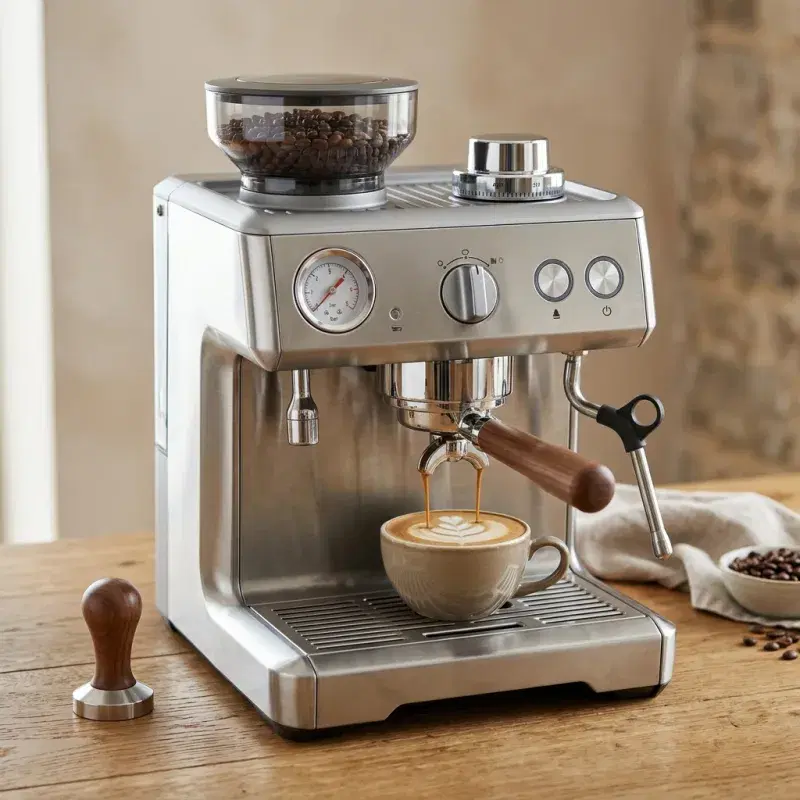
Semi-automatic machines like the 🛒 Breville Barista Express ($550) or the 🛒 Gaggia Classic Pro ($450) are the standard entry points. Bean-to-cup machines like the 🛒 De'Longhi Magnifica Evo ($350) automate the process while still using fresh beans.
👉 Our recommendation
Breville Barista Express
Price verified 0 min ago
The hidden costs
A proper espresso setup requires a capable grinder ($150-$300 if separate), fresh beans, and cleaning supplies. The learning curve costs time and wasted shots. But once dialed in, the quality is unbeatable at home.
Capsule Coffee: The Convenience King
Capsule systems — Nespresso, Keurig, Dolce Gusto — have conquered the world by solving one problem perfectly: speed. Pop in a pod, press a button, and drink in under a minute.
What capsule coffee tastes like
Nespresso Original line produces a credible espresso with real crema, though slightly less complex than freshly ground. Vertuo line creates mug-sized coffees with a thick foam layer that looks impressive. Keurig produces smooth, drip-style coffee in larger volumes. No capsule system matches the depth of freshly ground beans, but the consistency is flawless — every cup tastes exactly like the last.
Who capsules are for
- The time-starved: If your morning allows 60 seconds for coffee, capsules are your friend.
- The consistency-seeker: Every capsule is identical. No bad shots, no dialing in.
- The occasional drinker: If you drink 1-2 cups a day, the higher per-cup cost is manageable.
- The minimalist: No grinder, no scale, no tamper. Just a small machine and a box of pods.
Equipment needed
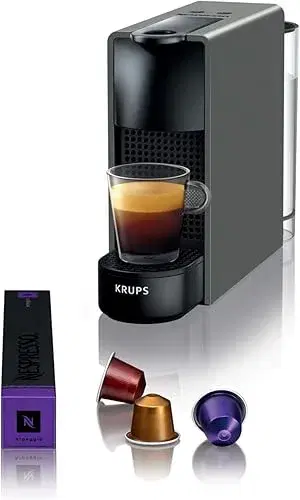
The 🛒 Nespresso Essenza Mini ($85) is the compact champion. The 🛒 Keurig K-Mini Plus ($80) dominates the American market for larger cups.
The hidden costs
At $0.40-$0.65 per capsule, a two-cup-a-day habit costs $290-$475 per year — more than triple the cost of beans. You're also locked into a capsule ecosystem: Original, Vertuo, K-Cup, or Dolce Gusto. Choose wrong, and switching means buying a new machine.
Filter Coffee: The Quiet Champion
Filter (drip) coffee is the unsung hero of the coffee world. It doesn't have espresso's intensity or capsule's convenience marketing, but it produces a clean, nuanced cup that many professionals prefer for tasting single-origin beans.
What filter coffee tastes like
Filter coffee highlights clarity and origin character. Without the pressure of espresso, you taste the terroir — the blueberry notes of Ethiopian Yirgacheffe, the chocolate depth of Brazilian Santos. The body is lighter, the acidity more pronounced, and the finish cleaner.
Who filter coffee is for
- The volume drinker: One brew makes 4-10 cups. Perfect for families and offices.
- The health-conscious: Paper filters remove cafestol and kahweol, oils linked to cholesterol.
- The budget-minded: Lowest equipment and per-cup costs of any method.
- The purist: If you want to taste what the bean actually tastes like, filter is the window.
Equipment needed
The 🛒 Technivorm Moccamaster ($280) is the gold standard, certified by the Specialty Coffee Association for brew temperature consistency. For a budget option, the 🛒 Bonavita Connoisseur ($150) produces excellent coffee for half the price.
The hidden costs
Filter coffee's main weakness is waste. If you brew a full carafe and only drink one cup, you're pouring money down the drain. Thermal carafes help by keeping coffee drinkable for 1-2 hours without heating plates that scorch the brew.
Head-to-head: Taste, cost, and convenience
Taste quality
Winner: Espresso (freshly ground)
Nothing beats freshly ground beans extracted under pressure by a skilled operator. However, the gap narrows significantly with bean-to-cup machines, which automate the process while preserving freshness. Capsules rank third — consistent and good, but capped in complexity. Filter coffee wins for clarity and origin expression but loses to espresso in intensity.
Daily convenience
Winner: Capsule
30 seconds from thought to sip, zero cleanup. Filter coffee is nearly as easy (add water and grounds, press start) but requires washing the carafe. Espresso demands the most effort: grinding, dosing, tamping, extracting, and cleaning the portafilter.
Long-term cost
Winner: Filter coffee
At $0.05-$0.12 per cup, filter brewing is the most economical. Espresso with fresh beans runs $0.08-$0.15 per cup but requires expensive equipment. Capsules cost $0.40-$0.65 per cup — 4-8x more expensive over a year.
Milk drinks (cappuccinos & lattes)
Winner: Espresso
Only espresso machines produce the concentrated base needed for proper milk drinks. Bean-to-cup machines with automatic frothers (LatteCrema, LatteGo) make this effortless. Semi-auto machines with steam wands produce the best foam quality. Capsule users need a separate milk frother. Filter coffee cannot make milk drinks at all.
Environmental impact
Winner: Filter coffee / Espresso with beans
Ground coffee and paper filters are compostable. Metal filters eliminate waste entirely. Capsules generate the most waste — even recyclable aluminum pods require energy-intensive processing. Reusable capsules exist but produce inferior results.
Which method should you choose?
Choose Espresso if...
- You love cappuccinos, lattes, or flat whites
- You enjoy the ritual and craft of coffee making
- You drink 2-4 cups daily and want the best quality
- You have counter space and a grinder budget
Our pick: 🛒 Breville Barista Express for learners, 🛒 De'Longhi Magnifica Evo for effortless quality.
Choose Capsules if...
- Speed and zero cleanup are your top priorities
- You drink 1-2 cups a day
- You value consistency over customization
- You have limited counter space or travel frequently
Our pick: 🛒 Nespresso Essenza Mini for espresso lovers, 🛒 Keurig K-Mini Plus for larger cups.
Choose Filter if...
- You drink multiple mugs throughout the morning
- You want the lowest cost per cup
- You appreciate nuanced, origin-forward flavors
- You prefer a hands-off brewing process
Our pick: 🛒 Technivorm Moccamaster for the gold standard, 🛒 Bonavita Connoisseur for value.
The hybrid approach
Many coffee lovers eventually own multiple systems. A common setup:
- Weekday mornings: Capsule or bean-to-cup for speed
- Weekend leisure: Semi-auto espresso for the ritual
- Guests and family: Filter machine for volume
You don't have to choose one forever. Start with the method that fits your current lifestyle, and expand as your coffee journey evolves.
FAQ
Which brewing method produces the strongest coffee?
Espresso has the highest concentration of coffee solids per ounce, making it the "strongest" in terms of flavor intensity and caffeine per volume. However, a full mug of filter coffee typically contains more total caffeine than a single espresso shot.
Is filter coffee healthier than espresso?
Filter coffee removes more cafestol and kahweol — compounds that can raise LDL cholesterol — thanks to the paper filter. Espresso and French press retain more of these oils. For cholesterol-conscious drinkers, filtered coffee has a slight edge.
Why does espresso taste so different from filter coffee?
Espresso uses high pressure (9 bars) to extract coffee in 25-30 seconds, creating concentrated flavors, body, and crema. Filter coffee uses gravity and takes 3-5 minutes, producing a cleaner, lighter, more nuanced cup that highlights origin characteristics.
Can I make espresso without a machine?
Not true espresso, which requires 9 bars of pressure. However, the Moka pot produces a strong, concentrated coffee that many Italians call their daily espresso. AeroPress can produce espresso-like strength but at lower pressure.
Which method is best for beginners?
Capsule machines are the easiest entry point. Filter coffee makers are nearly as simple and much cheaper long-term. Semi-automatic espresso has the steepest learning curve but offers the most reward for enthusiasts.
Final thoughts
Espresso, capsule, and filter are not competitors — they're different paths to the same destination: a great cup of coffee. The "best" method is the one you'll actually use, enjoy, and maintain.
If you drink one quick cup before rushing to work, capsules make sense. If you savor a cappuccino while reading the news, espresso is your ritual. If your household polishes off a pot before 9 AM, filter coffee is the workhorse you need.
Whatever you choose, the important thing is that your morning coffee brings you joy. Because a good day starts with a good cup — however you brew it.
→ Read next: How to choose a coffee machine
→ Best espresso machines 2026
→ Best capsule coffee machines 2026
→ Best filter coffee machines 2026
📧 Never miss a coffee deal
Sign up to get our expert reviews and promo alerts straight to your inbox.
🔒 Join 5,000+ readers — By signing up, you agree to our privacy policy.
Articles similaires
Christmas Coffee Gift Guide 2026: Best Ideas to Give
Christmas 2026 coffee gifts: the best capsule machine sets, bean-to-cup machines, premium coffee beans and barista accessories. Selection by budget, with the lowdown on Black Friday deals.
Lire l'article →
2026 Study: The Real Cost of a Cup of Coffee at Home
What does a cup of coffee at home really cost in 2026? Study based on real prices: automatic bean 0,28 €, capsules 0,55 €, filter 0,47 €, moka 0,36 €. Bean machine vs capsules break-even: 17 months.
Lire l'article →
Best Coffee Beans 2026: Tested in Real Conditions
Best coffee beans 2026: Lavazza, illy, Nespresso Original and compatible capsules put to the test. Selection by use, budget and machine — the guide to choosing a coffee that changes your daily routine.
Lire l'article →