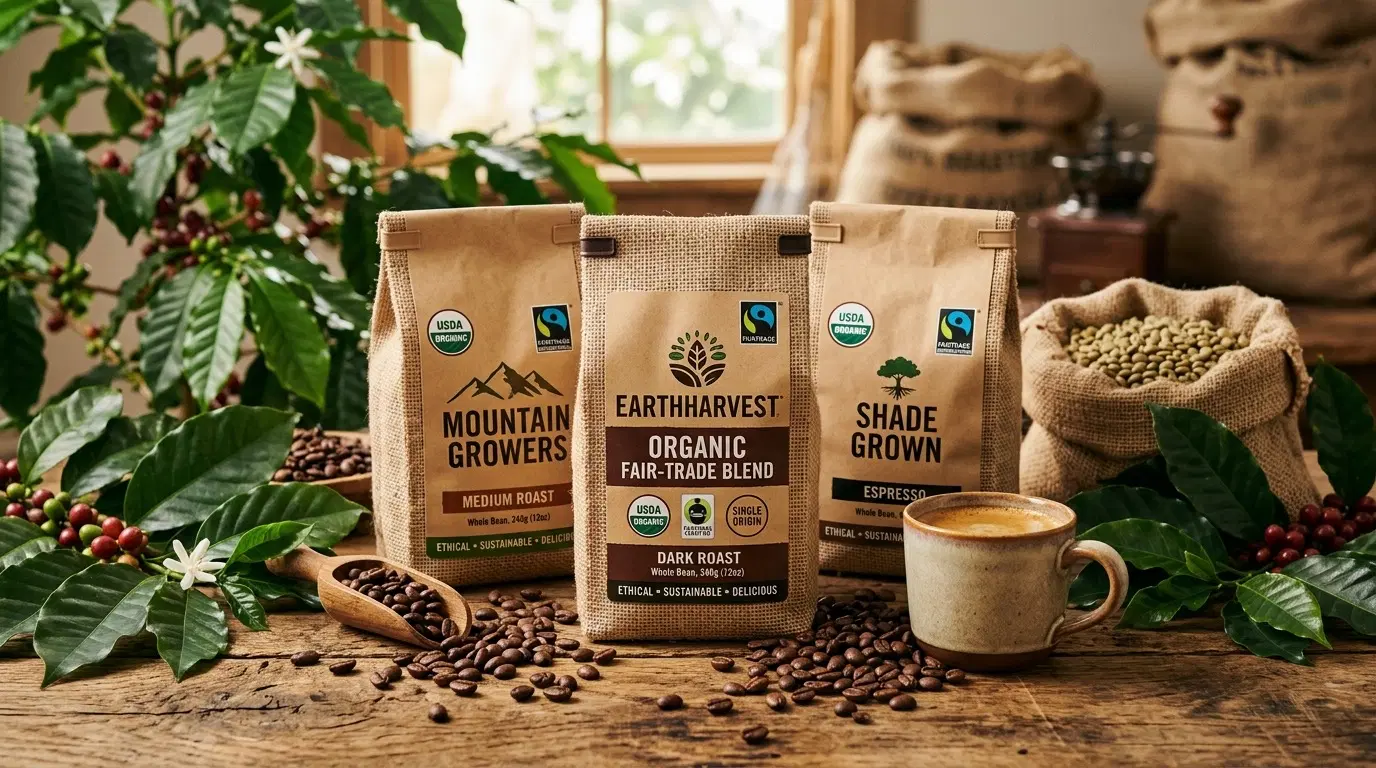
Organic & Fair-Trade Coffee Beans: The Best of 2026
Buying guide to the best organic and fair-trade coffee beans in 2026: origins, roasts, certifications, and a selection available on Amazon.
Organic & Fair-Trade Coffee Beans 2026 - The Best Premium Brands
Great coffee, but responsibly sourced. Organic, fair-trade, or both. In 2026, five brands stand out. We test taste, origin, and value for money.
☕ What about decaf? Organic decaffeinated coffee exists too. Discover the natural processes and the best machines in our decaffeinated coffee guide.
Certification guide
| Certification | Meaning | Guarantee |
|---|---|---|
| AB Bio | No pesticides or GMOs | Environment |
| Fairtrade | Minimum price for producers | Social + env |
| Rainforest Alliance | Sustainable farming | Env + social |
| Bio Equitable France | Organic + fair-trade + French | All three |
⚙️ Grinding your organic coffee. To preserve the delicate aromas of organic beans, a good grinder is essential. Our manual vs electric grinder guide helps you choose.
AB = no pesticides. Fairtrade = minimum income for producers. Bio Equitable France = the most comprehensive.
Origin and price comparison
| Brand | Origin | Price/kg | Certifications | Roast |
|---|---|---|---|---|
| Malongo Bio | Central America/Africa | 12e | AB + Fairtrade | Medium |
| Belmoka Equitable | South America | 15e | AB + Fairtrade | Dark |
| Ethiquable | South America | 11e | AB + Fairtrade | Variable |
| Terres de Cafe Bio | Ethiopia/Kenya | 14e | AB | Light |
| LaFrancaise Bio | Brazil/Colombia | 10e | AB | Medium |
Belmoka = the most expensive, with a premium roast. LaFrancaise = the affordable option.
1. Malongo Bio (~12e/kg)
Malongo, a Nice-based roaster. An organic range that is both AB- and Fairtrade-certified. Balanced, affordable, reliable.
Strengths
- Dual AB + Fairtrade certification
- Balanced medium roast
- Chocolate and dried-fruit notes
- Available in supermarkets
- CSR commitment
Weaknesses
- Mid-range price (12e/kg)
- Standard flavour profile
- Blended origin
Our verdict: A safe choice for everyday organic, fair-trade coffee. Balanced, reliable, widely available.
🛒 Search for Malongo Bio on Amazon
2. Belmoka Equitable (~15e/kg)
Belmoka, a premium Belgian roaster. Exceptional coffee, artisan roasting, and a high price that is justified.
Strengths
- Artisan Belgian roasting
- Dual AB + Fairtrade certification
- Complex flavour profile
- Caramel and spice notes
- Premium packaging
Weaknesses
- High price (15e/kg)
- Available online and in specialist shops
- Dark roast, not for everyone
Our verdict: For connoisseurs. Expensive, but the quality delivers.
🛒 Search for Belmoka Equitable on Amazon
3. Ethiquable (~11e/kg)
Ethiquable, a French cooperative. Organic, fair-trade, and affordable. The best value for money.
Strengths
- French cooperative
- Dual AB + Fairtrade certification
- Affordable price (11e/kg)
- Strong social commitment
- A range of flavour profiles
Weaknesses
- Variable roast
- Basic packaging
- Less widely stocked in stores
Our verdict: The best value for money. Organic, fair-trade, and inexpensive.
🛒 Search for Ethiquable coffee beans on Amazon
4. Terres de Cafe Bio (~14e/kg)
Terres de Cafe: organic single-origin coffees. Ethiopia, Kenya, exceptional terroirs.
Strengths
- Single-origin (Ethiopia, Kenya)
- AB certified
- Light, aromatic roast
- Floral and fruity notes
- Ideal for espresso and filter
Weaknesses
- Organic only, not fair-trade
- High price (14e/kg)
- Light roast, not strong
- Available online
Our verdict: For terroir enthusiasts. If you want organic and fair-trade, pair it with a Fairtrade option.
🛒 Search for Terres de Cafe Bio on Amazon
5. LaFrancaise Bio (~10e/kg)
LaFrancaise = the budget organic option. AB certified, an unbeatable price, and decent quality.
Strengths
- Lowest organic price (10e/kg)
- AB certified
- Available in supermarkets
- Versatile medium roast
Weaknesses
- No fair-trade certification
- Basic profile
- Blended origin
Our verdict: For organic on a budget. If fair-trade matters to you, step up to Ethiquable or Malongo.
🛒 Search for LaFrancaise Bio on Amazon
Internal links
FAQ
Is organic really better for your health?
Organic guarantees the absence of pesticides. For coffee, the health impact is marginal because pesticides are found mainly in the cherry, not the roasted bean. The main benefit is environmental.
Why is fair-trade coffee more expensive?
The guaranteed minimum price paid to producers is higher than the market price. This difference covers decent working conditions and sustainable practices. It is an ethical choice, not just a matter of taste.
Can organic and fair-trade go hand in hand with great taste?
Absolutely. Certification has no impact on taste. Belmoka and Terres de Cafe prove that organic and fair-trade can also mean exceptional coffee. It all comes down to origin and roast.
Where can you buy organic, fair-trade coffee beans?
Online (Amazon, brand websites), organic stores (Biocoop, Naturalia), and some supermarkets. Artisan roasters offer organic, but rarely certified fair-trade.
📧 Never miss a coffee deal
Sign up to get our expert reviews and promo alerts straight to your inbox.
🔒 Join 5,000+ readers — By signing up, you agree to our privacy policy.
Articles similaires
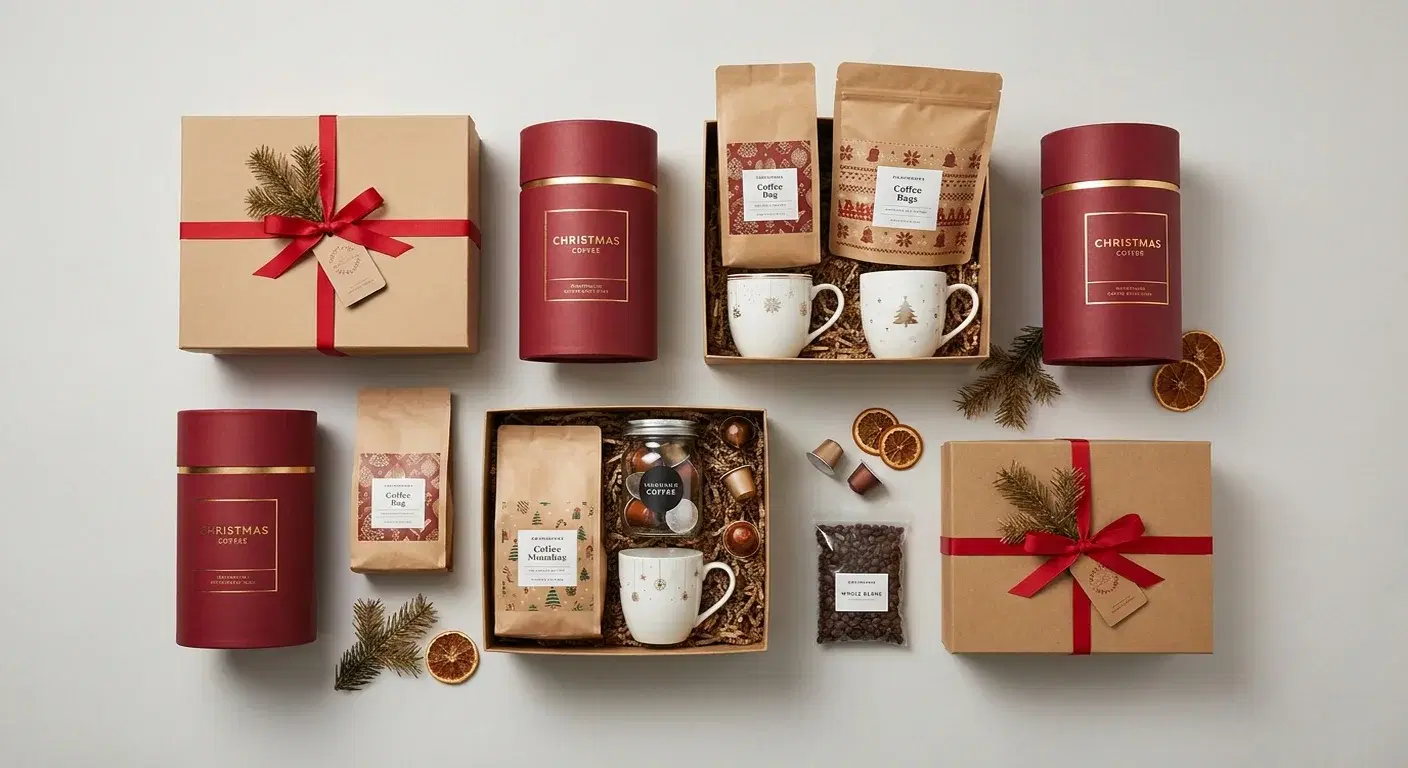
Christmas Coffee Gift Guide 2026: Best Ideas to Give
Christmas 2026 coffee gifts: the best capsule machine sets, bean-to-cup machines, premium coffee beans and barista accessories. Selection by budget, with the lowdown on Black Friday deals.
Lire l'article →
2026 Study: The Real Cost of a Cup of Coffee at Home
What does a cup of coffee at home really cost in 2026? Study based on real prices: automatic bean 0,28 €, capsules 0,55 €, filter 0,47 €, moka 0,36 €. Bean machine vs capsules break-even: 17 months.
Lire l'article →
Best Coffee Beans 2026: Tested in Real Conditions
Best coffee beans 2026: Lavazza, illy, Nespresso Original and compatible capsules put to the test. Selection by use, budget and machine — the guide to choosing a coffee that changes your daily routine.
Lire l'article →