Affiliate links: we earn a commission on purchases, at no extra cost to you.
Our top 3 picks at a glance
329-399€
See deal →99-129€
See deal →The best pick for your needs
| Best value | Nespresso Pixie Krups XN304T10 | 8.5/10 | 99-129€ |
| Best premium | De'Longhi Magnifica Evo ECAM290.61 | 9/10 | 329-399€ |
| Highest rated | Baratza Encore ESP | 8.5/10 | $169 - $189 |
Coffee Beans vs Capsules: The Ultimate 2026 Comparison
Coffee beans or capsules? Complete 2026 comparison: taste, price, convenience, ecology. Which system is more cost-effective and delivers the best cup?
In brief
Our verdict
Coffee beans win on almost every front: cup quality, cost per cup, ecology and variety. Capsules stay ahead on convenience and speed. If you drink 2+ coffees per day, beans pay for themselves within a few months.
Budget pick
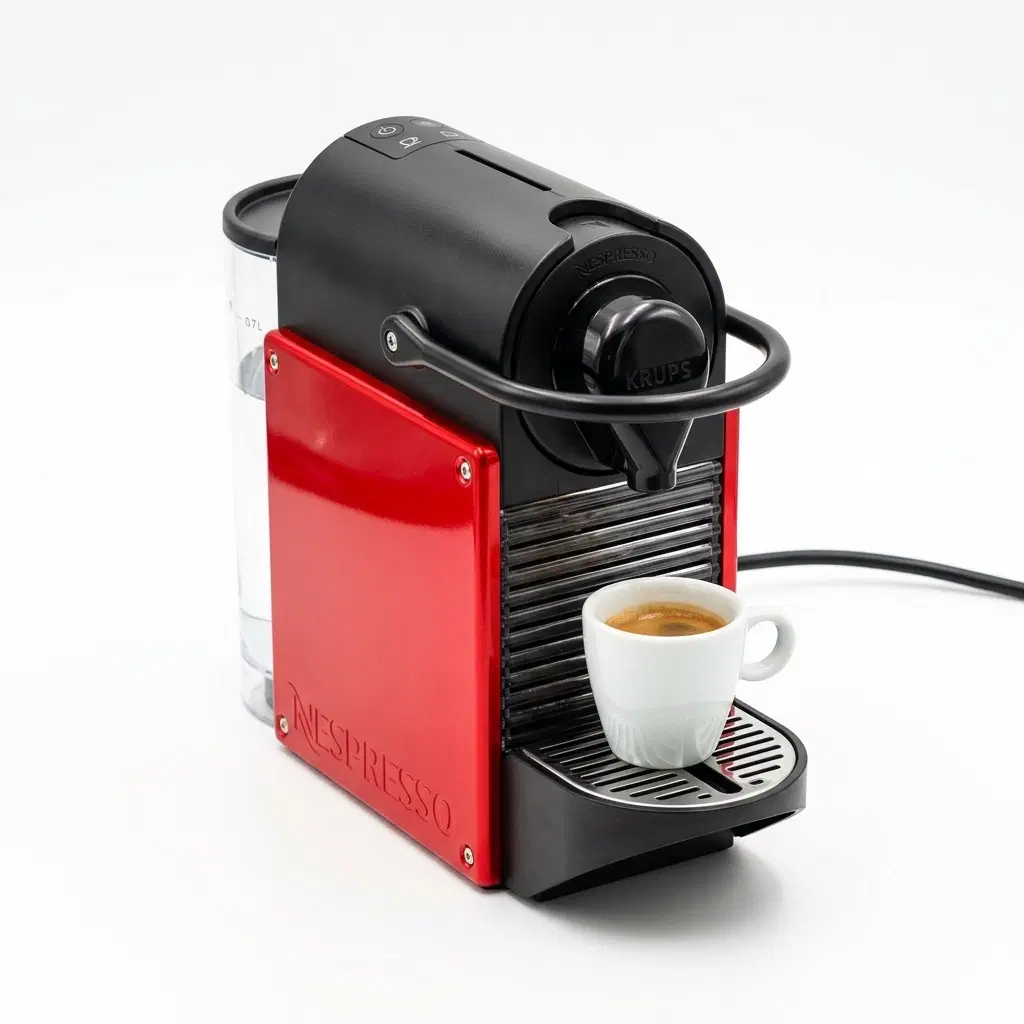
Nespresso Pixie Krups XN304T10
€99.00 – €129.00
Best rated
De'Longhi Magnifica Evo ECAM290.61
9/10 · from €369.00
Premium pick
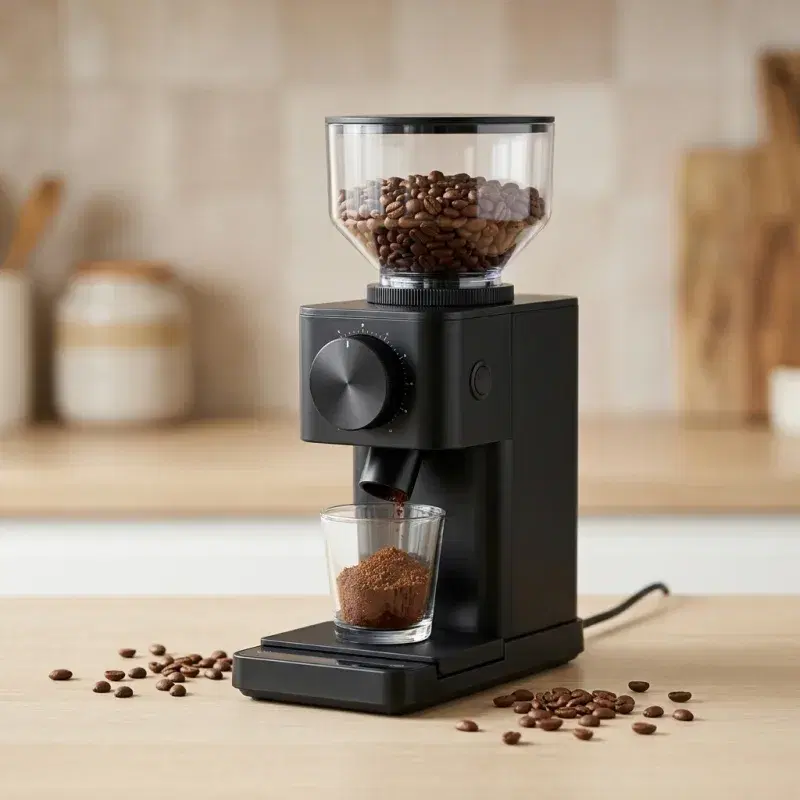
Baratza Encore ESP
€169.00 – €189.00
Key facts
3 products compared · 6 evaluation criteria · Average rating of the selection: 8.7/10 · Selection updated Mar 18, 2026
Products compared

Coffee Beans vs Capsules: The Definitive Comparison
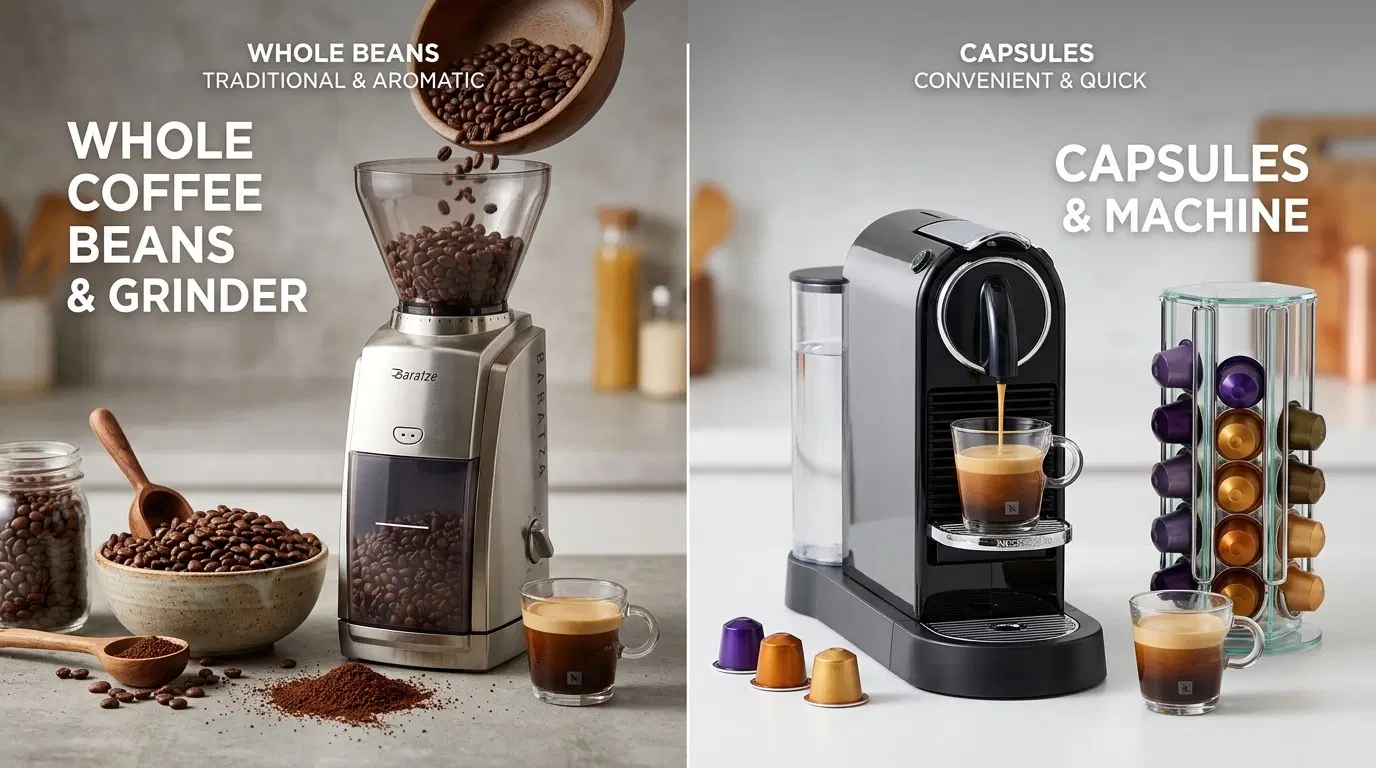
It's the fundamental question every coffee lover faces: should you switch to beans or stick with capsules? Both camps have their arguments. We've compared them point by point to help you decide.
The Match in Numbers
| Criteria | Coffee Beans | Capsules (Nespresso) |
|---|---|---|
| Cost per cup | $0.08-0.16 | $0.38-0.54 |
| Machine investment | $302-756 | $85-216 |
| Preparation time | 60-90 sec (auto) | 30 sec |
| Aroma quality | ⭐⭐⭐⭐⭐ | ⭐⭐⭐⭐ |
| Freshness | Ground on demand | Nitrogen-sealed (good) |
| Waste | Compostable grounds | Aluminum/plastic |
| Maintenance | Weekly | Minimal |
| Variety | Unlimited | ~30 references |
Round 1: Cup Quality ☕
Winner: Coffee Beans
Freshness makes all the difference. Ground coffee loses 60% of its aromas within 15 minutes when exposed to air. A bean-to-cup machine grinds on demand: aromas are intact, crema is denser, taste is more complex.
Nespresso capsules deliver consistent, well-extracted coffee thanks to vacuum and nitrogen packaging. Quality is good — but it'll never compete with freshly roasted beans ground on the spot.
The baristas' verdict: No professional coffee shop works with capsules. Think about that.
Round 2: Cost Per Cup — The Math That Hurts 💰
Winner: Coffee Beans (by a landslide)
Let's do the math for 2 coffees per day over 3 years:
Nespresso Capsules
- Machine: $118 (Pixie)
- Capsules: $0.43 × 2 × 365 × 3 = $946
- 3-year total: $1,064
Coffee Beans
- Machine: $377 (De'Longhi Magnifica Evo)
- Bean coffee: $0.11 × 2 × 365 × 3 = $237
- 3-year total: $613
3-year savings: $450 with beans. And the more you drink, the wider the gap becomes.
Even with a premium bean machine at $756, you're break-even within 18 months compared to capsules.
Round 3: Convenience ⏱️
Winner: Capsules
Insert a capsule, press a button, 30 seconds later your coffee is ready. No grinder to clean, no puck to dump. That's the main (and pretty much only) argument for capsules.
Automatic bean machines have narrowed the gap: the De'Longhi Magnifica Evo dispenses a coffee in 60 seconds. But there's still weekly maintenance (grounds bin, rinse, monthly descaling).
Our take: The convenience difference is real but overstated. If you can spare an extra 30 seconds in the morning and 5 minutes of maintenance per week, beans are very manageable.
Round 4: Ecology 🌱
Winner: Coffee Beans
The average French person consumes 5.4 kg of coffee per year. In capsules, that's roughly 720 capsules per year. Even with recycling programs, some end up in landfill.
Coffee beans only produce coffee grounds — excellent compost for plants. Zero aluminum, zero plastic, zero recycling program needed.
Carbon footprint: Producing one aluminum capsule emits 10x more CO2 than the equivalent in beans. Transport, individual packaging and recycling add to the burden.
Round 5: Variety and Discovery 🌍
Winner: Coffee Beans
The world of coffee beans is infinite. Single origin Ethiopia, Kenya, Colombia, Brazil. Light, medium, dark roasts. Micro-lots, specialty coffees, local artisan roasters.
Nespresso capsules offer around 30 references. That's fine, but it's a closed garden. With beans, you can order from roasters like Belleville, Lomi, Terres de Café and discover flavor profiles impossible to find in capsule form.
The Break-Even Point
How many coffees per day before beans become cost-effective?
| Coffees/day | Bean break-even vs capsules |
|---|---|
| 1 coffee | ~24 months |
| 2 coffees | ~12 months |
| 3 coffees | ~7 months |
| 4+ coffees | ~5 months |
If you drink 2 or more coffees per day, switching to beans is a profitable investment within a year.
Our Recommendations
To Switch to Beans
De'Longhi Magnifica Evo — Best value for money 🛒 → See on Amazon
Jura E8 — Premium for the demanding 🛒 → See on Amazon
To Stay with Capsules (but better)
Nespresso Pixie — Best espresso quality in capsule form 🛒 → See on Amazon
The Best of Both Worlds
Some bean machines also accept ground coffee: you can alternate beans daily with specialty ground coffee on weekends.
Our Verdict
Coffee beans win on 4 out of 5 criteria (quality, price, ecology, variety). Capsules only keep the edge on convenience — and even then, modern automatic machines have reduced the gap to 30 seconds.
Our advice: If you love coffee and drink it regularly, switch to beans. Your palate and your wallet will thank you. Capsules remain relevant for occasional drinkers (max 1 coffee/day) who prioritize absolute simplicity.
→ See also : Test Jura E8 → Test Delonghi Magnifica Evo → How To Descale Coffee Machine 2026 → Best Coffee Deals Black Friday 2026 → Latte Art For Beginners