Our top 3 picks at a glance
329-399€
See deal →599-699€
See deal →120-160€
See deal →The best pick for your needs
| Best overall | De'Longhi Magnifica Evo ECAM290.61 | 9/10 | 329-399€ |
| Best value | De'Longhi Dedica EC685 | 9/10 | 120-160€ |
| Best premium | Sage Barista Express SES875 | 9/10 | 599-699€ |
| Highest rated | Philips 3200 LatteGo EP3243/50 | 8.8/10 | 449-549€ |
Manual vs Automatic Espresso Machine 2026: Which to Choose?
Independent 2026 comparison: real-world tests, comparison table and expert verdict. Which one offers the best value for money? Find out →
Summary
The automatic machine wins on convenience and consistency. The manual gives you total control and potentially superior coffee. Choose automatic if you value time, manual if you value the ritual and the craft.
Products compared

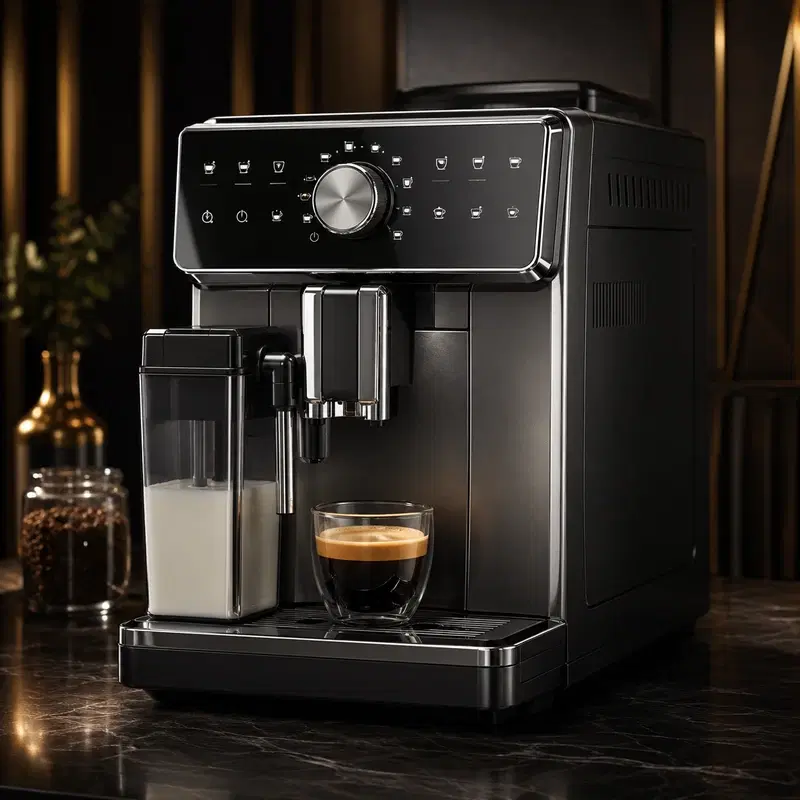
Manual vs Automatic Espresso Machine: The 2026 Comparison
It's one of the great home-coffee debates: should you go for a manual espresso machine, which offers total control, or an automatic one, which promises coffee at the touch of a button? The answer depends on your personality, your schedule and what you expect in the cup.
Quick answer: Choose an automatic machine if you value time, simplicity and consistency. Choose a manual one if you love the ritual, want to master every variable and dream of latte art. For equal quality, the manual costs less. For equal time, the automatic wins.
| Critère | Sage Barista Express SES875Sage | De'Longhi Dedica EC685De'Longhi | Top choixDe'Longhi Magnifica Evo ECAM290.61De'Longhi | Philips 3200 LatteGo EP3243/50Philips | Saeco PicoBaristo SM5473/10Saeco |
|---|---|---|---|---|---|
| Prix | 599-699€ | 120-160€ | 329-399€ | 449-549€ | 450-550€ |
| Type | Machine expresso semi-automatique | Machine expresso semi-automatique | Machine expresso automatique | Machine automatique à grain | Machine automatique à grain |
| Pression | 15 bar | 15 bar | 15 bar | 15 bar | 15 bar |
| Capacité eau | 2 L | 1,1 L | 1,8 L | 1,8 L | 1,8 L |
| Capacité grains | 250 g | - | 250 g | 275 g | 250 g |
| Puissance | 1600 W | 1300 W | 1450 W | 1500 W | 1850 W |
| Mouture | Broyeur conique intégré | - | - | - | - |
| Largeur | - | 15 cm | - | - | - |
| Compatibilité | - | Café moulu + dosettes ESE | - | - | - |
| Broyeur | - | - | Conique 13 niveaux | - | - |
| Cappuccino | - | - | Automatique (Cappuccino System) | - | - |
| Système lait | - | - | - | LatteGo (sans tuyau) | Carafe à lait intégrée |
| Note globale | 9/10 | 9/10 | 9/10 | 8.8/10 | 8.7/10 |
| Acheter | Check current price →Lire notre test → | Check current price → | Check current price →Lire notre test → | Check current price → | Check current price → |
By the Numbers
| Criterion | Manual (Sage Barista Express) | Automatic (De'Longhi Magnifica Evo) |
|---|---|---|
| Preparation time | 5-10 min | 60-90 sec |
| Investment | 140-700€ | 300-600€ |
| Learning curve | 2-4 weeks | Immediate |
| Maximum quality | ⭐⭐⭐⭐⭐ | ⭐⭐⭐⭐☆ |
| Consistency | Depends on the barista | Perfect |
| Latte art | Yes | No |
| Daily maintenance | 3-5 min | 1-2 min |
| Built-in grinder | Sometimes | Always |
Manual machine: who is it for?
A manual machine (or semi-automatic) puts you in charge. You grind the coffee, fill the portafilter, tamp, start the extraction and stop it at the right moment. It's a ritual that takes practice but offers unmatched satisfaction.
The advantages of a manual machine
- Total control: grind, dose, pressure, temperature, extraction time
- Potentially superior quality when everything is dialled in
- Latte art is possible with a pro steam wand
- Accessible entry price (~€140 without a grinder)
- Durability: simple mechanics, easy to repair
The drawbacks of a manual machine
- A learning curve of several weeks
- Long preparation time (5-10 min)
- Variable results depending on your skill on the day
- Manual cleaning of the portafilter after every coffee
- An external grinder is needed if the machine doesn't have one
Our recommended models
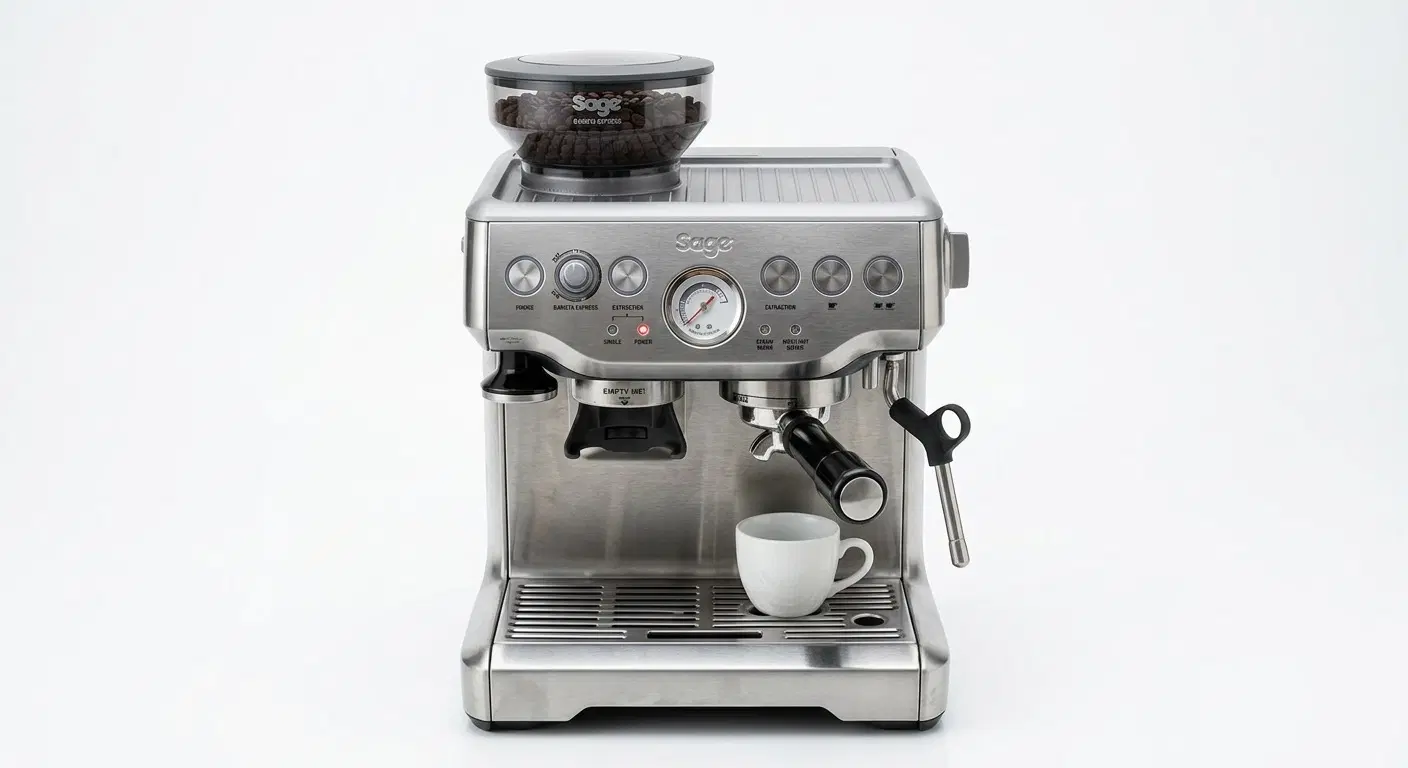
Sage Barista Express — The benchmark manual machine with a grinder 🛒 → See on Amazon
Conical grinder with 25 settings, professional steam wand, ThermoCoil heating. This is the tool for amateur baristas.
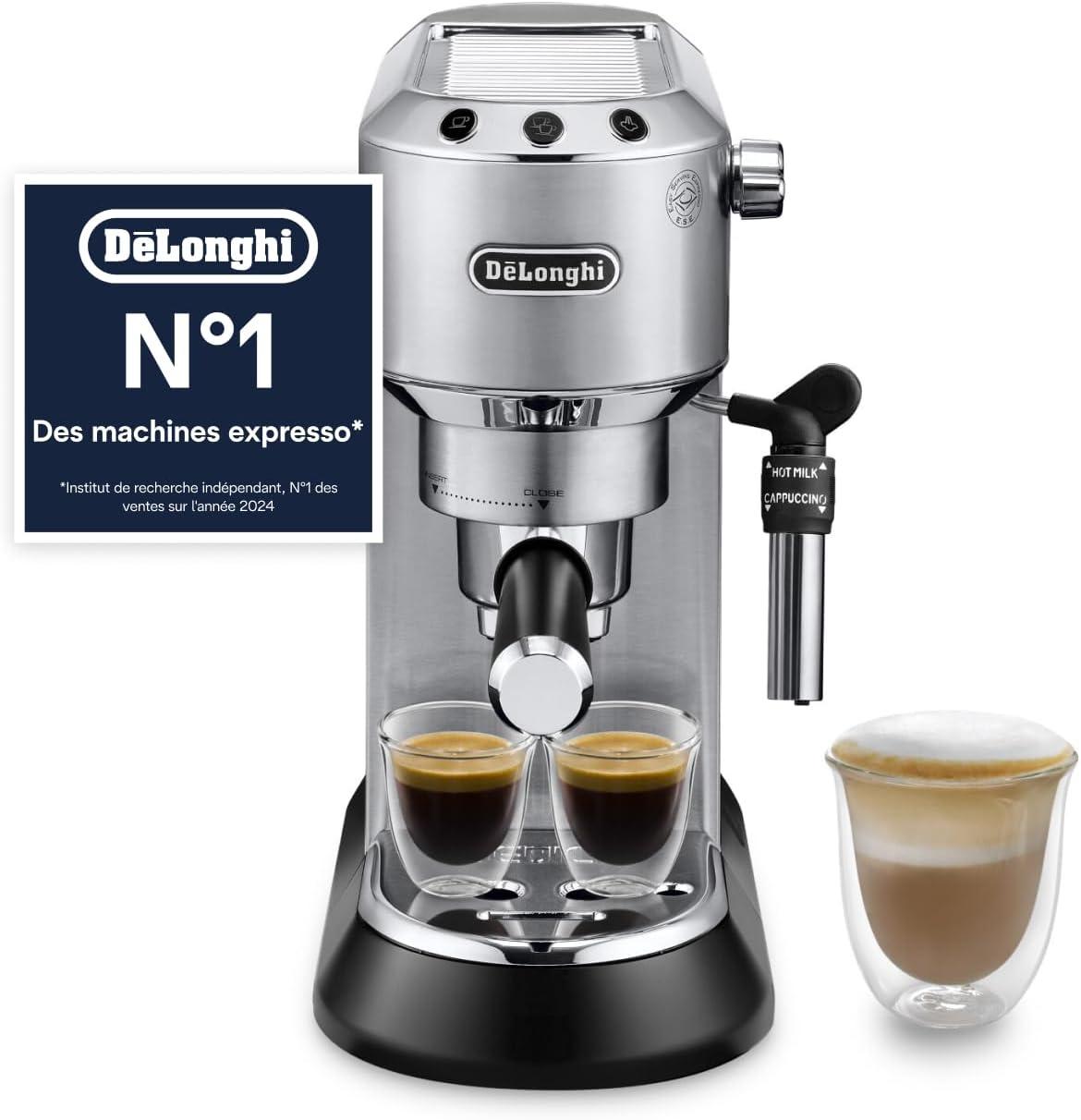
De'Longhi Dedica EC685 — The efficient entry-level pick 🛒 → See on Amazon
At just 15 cm wide and around €140, it's the most accessible manual machine on the market. Compatible with ground coffee and ESE pods.
Automatic machine: who is it for?
An automatic machine does everything for you: grinding, dosing, tamping, extraction and ejecting the puck. You press a button and the coffee arrives. It's the solution for busy daily life.
The advantages of an automatic machine
- A coffee in 60-90 seconds — one press is enough
- Perfect consistency: every coffee is identical
- A built-in grinder as standard
- Automatic cleaning programmes
- Built-in milk systems for cappuccino at the touch of a button
The drawbacks of an automatic machine
- Less control over the extraction variables
- No latte art
- Complex mechanics = costlier repairs
- Higher entry price (~€300 minimum)
Our recommended models
De'Longhi Magnifica Evo — The mid-range benchmark 🛒 → See on Amazon
13-level grinder, automatic LatteCrema, proven reliability. The best balance of quality, price and convenience.
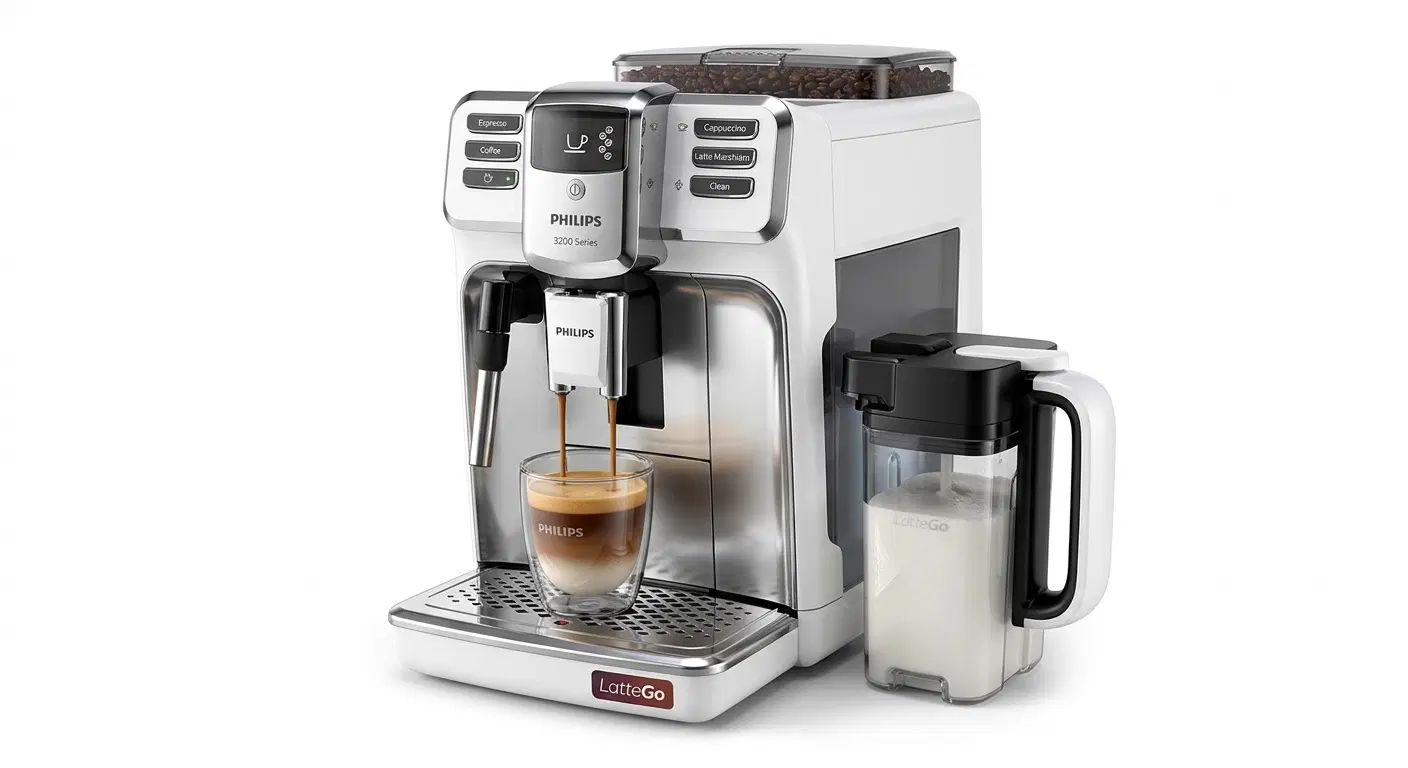
Philips 3200 LatteGo — The hygienic choice 🛒 → See on Amazon
Tube-free milk system, ceramic grinder, touchscreen interface. The choice for those who are particular about cleanliness.
Saeco PicoBaristo — The compact premium 🛒 → See on Amazon
10 drinks at the touch of a button, removable milk carafe, stainless-steel design. Everyday elegance.
Espresso Quality Comparison
The manual wins — potentially. A well-mastered manual machine (Sage, Lelit, Rocket) produces an espresso with a denser crema, a richer body and more complex aromas. But that assumes a skilled barista.
The automatic wins — on consistency. The machine never gets the dose wrong and never tamps too hard or too soft. The result is always good, even at 7am on a Monday morning.
Verdict: If you're willing to invest time in learning, the manual offers a higher ceiling. If you want good coffee without thinking about it, the automatic is unbeatable.
3-Year Cost Comparison
Manual (Sage Barista Express)
- Machine: €650
- Coffee beans: €0.10 × 2 × 365 × 3 = €219
- 3-year total: €869
Automatic (De'Longhi Magnifica Evo)
- Machine: €350
- Coffee beans: €0.10 × 2 × 365 × 3 = €219
- 3-year total: €569
Over the long term, the automatic is cheaper to buy and identical in running costs.
Final Verdict: Manual or Automatic?
Choose manual if:
- You love the coffee ritual
- You want to master every variable
- Latte art appeals to you
- You have 5-10 minutes every morning
Choose automatic if:
- You want good coffee with no effort
- Your mornings are already busy
- You drink several coffees a day
- Consistency matters more than marginal excellence
In Summary
The automatic machine wins on convenience, speed and consistency. The manual offers total control and potentially superior coffee. For 90% of households, the automatic (De'Longhi Magnifica Evo or Philips 3200) is the smarter choice. The remaining 10% — enthusiasts, amateur baristas, lovers of the ritual — will be delighted with a Sage Barista Express.
FAQ
Does a manual espresso machine make better coffee than an automatic one?
Yes, potentially. A manual machine lets you adjust the grind, the dose and the pressure to pull a perfectly dialled-in espresso. But it takes experience. A well-set-up automatic produces excellent, consistent coffee effortlessly.
How long does an espresso take with a manual machine?
Between 5 and 10 minutes: grinding, tamping, extraction and cleaning the portafilter. An automatic delivers a coffee in 60 to 90 seconds.
Is an automatic machine easier to maintain?
Generally yes. Modern automatics include guided rinsing and descaling programmes. Manual machines require you to clean the portafilter and steam wand by hand after every use.
What budget do you need to start with a manual machine?
A good manual machine with a built-in grinder like the Sage Barista Express costs around €650. Without a grinder, the De'Longhi Dedica EC685 starts at around €140.
Can you do latte art with an automatic machine?
No. Latte art requires a manual steam wand to control the milk texture. Automatic systems produce decent foam, but not controlled enough for designs.
→ See also: Home Espresso Guide → Coffee Grind Settings Guide → Milk Foam & Cappuccino Guide → Which Coffee Machine to Choose Guide → De'Longhi Magnifica Evo Review
Articles similaires

The Best Jura Coffee Machine 2026: E6 vs E8 vs S8 Tested
We tested the Jura E6, E8 and S8 to find the best Jura coffee machine of 2026: best overall, best value and best premium pick.
Lire l'article →
De'Longhi vs Krups 2026: Which Bean to Cup Machine Wins?
De'Longhi Magnifica Evo vs Krups Essential in 2026: coffee quality, maintenance, price. Our comparison and the winner for an affordable bean machine.
Lire l'article →Jura vs Sage 2026: The Premium Machine Showdown
Jura E8 vs Sage Barista Express in 2026: automatic bean-to-cup or manual espresso machine with grinder? Control, milk, maintenance, price and our verdict.
Lire l'article →